Solo and body · 4 min read
Body image and size myths
Most men who worry about their penis or their body fall well within the normal range. Here is what the measurements actually show, why the worry is so common, and how to stop it running your sex life.
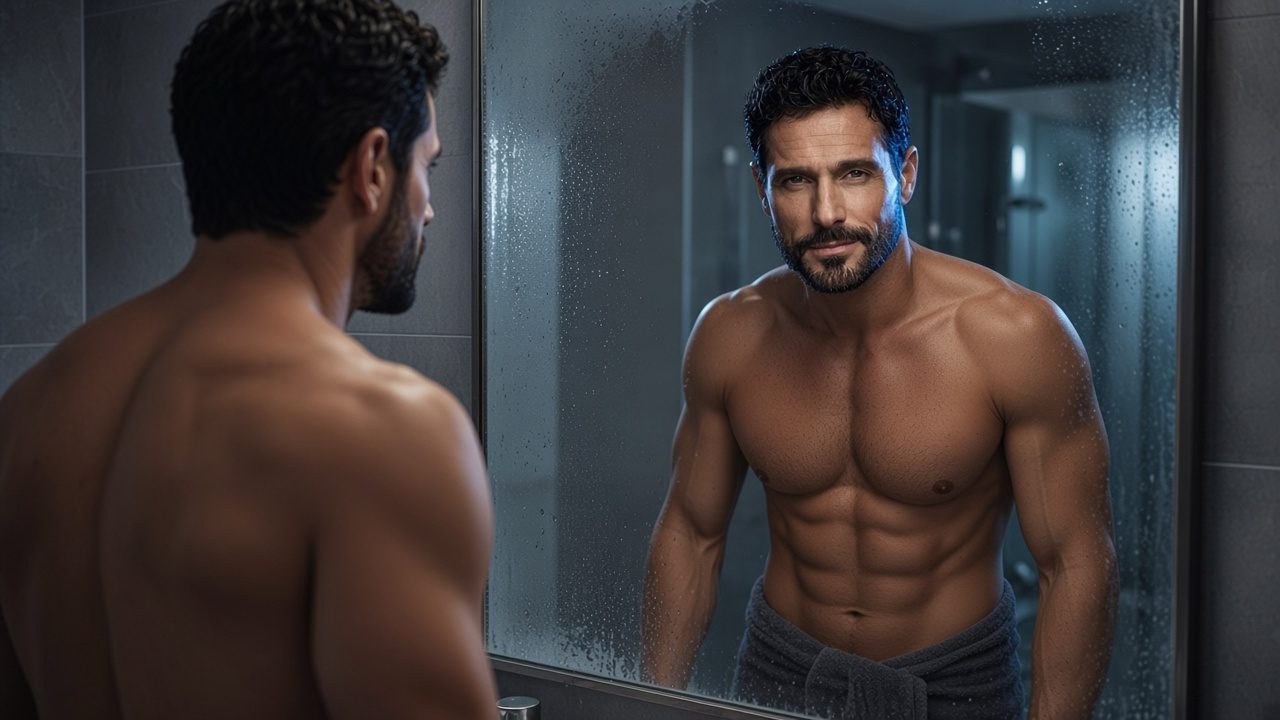
Almost every man has stood in front of a mirror at some point and wondered if he measures up. Size, belly, chest, hair, the shape of his penis, how he looks from above versus in a photo. The worry is so common it's practically universal, and it's mostly built on bad reference points: porn performers selected for size, filtered photos, locker-room glances at angles that flatter everyone else. Here's the real data, and what to do with the feeling.
What normal actually looks like
The best data we have comes from a 2015 systematic review by Veale and colleagues, which pooled clinician-taken measurements from over 15,000 men. Measured by a professional rather than self-reported, the average erect penis was about 13.1 cm (5.2 inches) long and 11.7 cm (4.6 inches) around. The average flaccid length was about 9.2 cm (3.6 inches).
Two things matter about those numbers. First, they're lower than most men assume, because self-reported figures and porn skew the picture upwards. Second, the spread is narrow. The large majority of men sit within a couple of centimetres of the average. Truly small penises, in the medical sense, are rare.
Flaccid size also tells you little about erect size. Some men "grow" a lot with an erection and some grow less. Cold, stress and exercise can all shrink the flaccid penis temporarily.
Why the worry sticks anyway
Wylie and Eardley, reviewing men who seek help about penis size, found that most of them were within the normal range. They described "small penis anxiety" as a problem of perception and comparison rather than anatomy. The ISSM makes the same point: normal covers a wide range of lengths, girths, curves, colours and shapes.
The worry persists because of how you look at yourself. Looking down foreshortens your own penis. You compare your flaccid state with other men's, or your real body with edited images. And anxiety narrows attention, so the thing you're worried about starts to feel like the only thing that matters.
What partners actually notice
Partners notice far more than size: attention, touch, confidence, how present you are, whether you ask what feels good. Many people with vulvas get most of their pleasure from the clitoris, which is on the outside and responds to hands, mouths and pressure far more than to depth. Many people find a very large penis uncomfortable. For anal sex, slower, well-lubricated and patient matters more than size in either direction.
The same is true of bodies generally. A belly, body hair, a scar or stretch marks rarely matter to someone who is already attracted enough to be in bed with you. What does land is you hiding, apologising or keeping a shirt on in a way that signals discomfort.
How to loosen the grip
- Stop measuring. Repeated checking feeds the worry. Put the tape away.
- Change your reference point. Unfollow content that leaves you feeling worse. Porn is casting, angles and editing, not a population sample.
- Do the friend test. Ask what you'd say to a friend with the same body. You'd probably be kinder, and more accurate.
- Put attention on sensation. Body-focused practices move attention from how you look to what you feel, which is where arousal and pleasure live anyway.
- Build skills, not inches. Learning to use your hands, mouth, pacing and communication improves sex far more reliably than any size change could.
Try tonight
- Stand in front of a mirror for two minutes, fully clothed or not, and describe three things about your body in neutral words: "broad shoulders", "soft belly", not "fat" or "small".
- Then lie down and do five minutes of slow touch across your chest, thighs and belly, rating how good each spot feels from 0 to 10.
- Write down one thing you'd say to a friend who had your exact worry.
- Next time you're intimate, leave the lights at a level you're comfortable with and focus on what you feel rather than how you look.
Products and procedures to be wary of
Pills, creams, jelqing routines and stretching devices sold online mostly lack good evidence, and some cause injury. Surgical enlargement carries real risks, including scarring, loss of sensation and erection problems, and dissatisfaction afterwards is common. Speak to a urologist before considering anything.
When to get help
If thoughts about your penis or body take up a lot of your day, make you avoid sex, dating or changing rooms, or drive repeated checking, you may be dealing with body dysmorphic disorder or penile dysmorphic disorder. The NHS notes BDD is treatable with cognitive behavioural therapy and sometimes medication. Talking to a GP is a good first step, and it's a far better investment than any device.
Sources
- 1.Am I normal? A systematic review and construction of nomograms for flaccid and erect penis length and circumference in up to 15,521 men.
- 2.Penile size and the 'small penis syndrome'.
- 3.What Is “Normal” When It Comes to the Penis? - ISSM
- 4.What is Penile Dysmorphic Disorder? - ISSM
- 5.Body dysmorphic disorder (BDD) - NHS
For adults 18+. Educational, not medical advice. Steel does not diagnose or treat medical conditions.